Thinking about buying a home but feeling discouraged by mortgage rates? You're not alone. For many buyers throughout Staten Island, Brooklyn, Queens, and the Bronx, the biggest challenge isn't


Dated: September 28 2026
Views: 0
Thinking about buying a home but feeling discouraged by mortgage rates? You're not alone. F
or many buyers throughout Staten Island, Brooklyn, Queens, and the Bronx, the biggest challenge isn't finding a house they like. It's finding a house they can comfortably afford. You may have the down payment saved.
You may have a steady income and a clear idea of where you want to live. But when you calculate the monthly mortgage payment, the numbers can make you wonder whether you should wait.
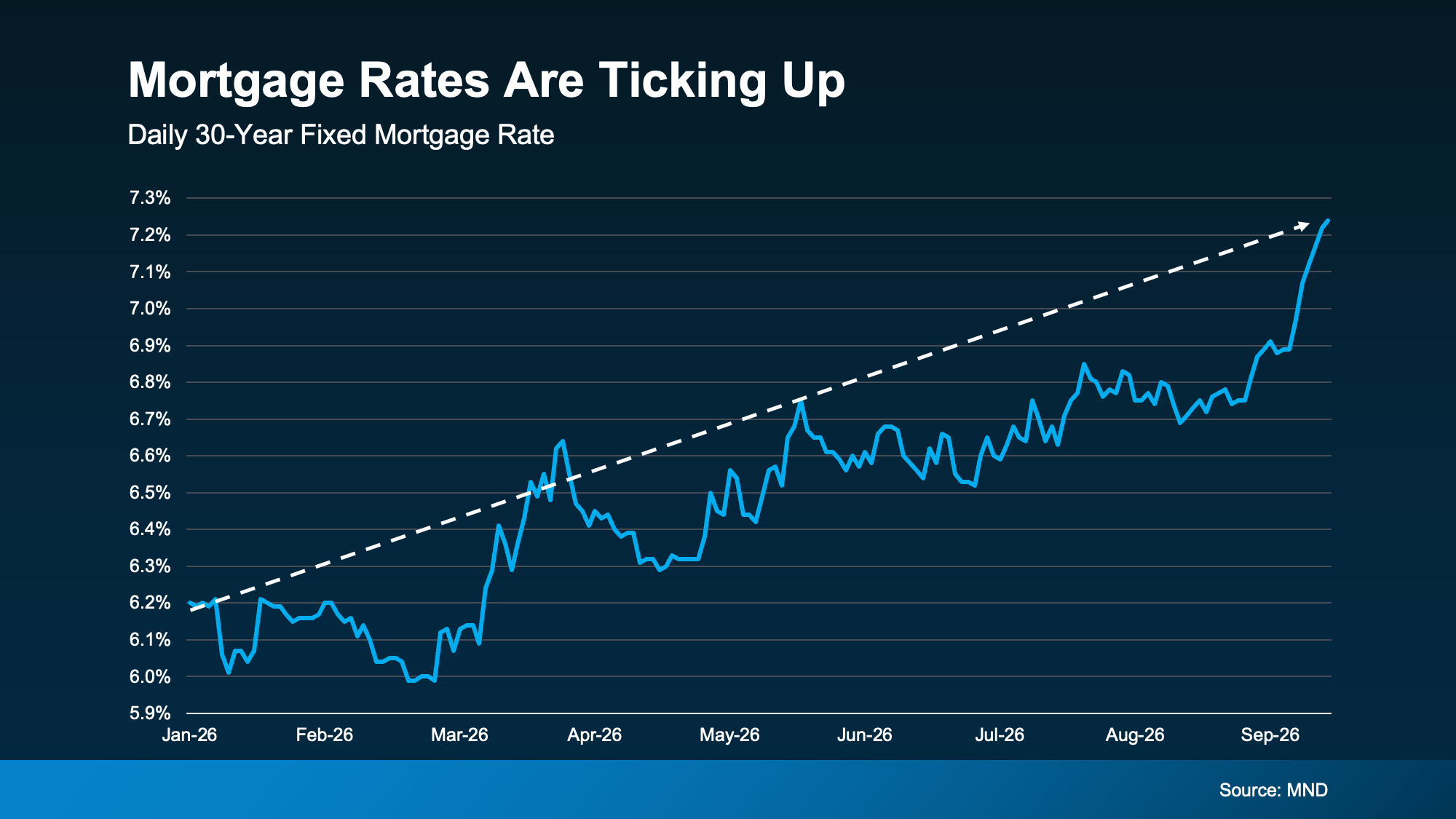
And with mortgage rates rising again, that decision may feel even more difficult. Here's something important to understand:
You can't control where mortgage rates go next, but you do have some control over the rate you're offered and the total cost of your mortgage.
That distinction matters. Instead of putting your entire home search on hold while waiting for the market to change, there are practical steps you can take to understand your options and potentially improve your purchasing power.
At Bhuiyan Properties®, we believe buyers should understand those options before deciding that homeownership is out of reach. Let's look at three things you can actually control.
Mortgage rates have moved higher in recent weeks. According to Freddie Mac's Primary Mortgage Market Survey, the average 30-year fixed mortgage rate reached 6.95% on September 17, 2026, up from 6.76% the previous week.
The average 15-year fixed mortgage rate was 6.26%. Those are national averages, not rates guaranteed to an individual borrower. Your actual offer depends on your financial profile, loan program, lender, property, and other factors.
Mortgage rates are influenced by inflation expectations, Treasury yields, financial-market conditions, economic data, and other factors.
The Federal Reserve also raised its benchmark interest rate in September, but it's important to understand that the Fed does not directly set 30-year mortgage rates. Mortgage rates can move before, after, or independently of a particular Fed decision.
You can't control those broader economic forces. What you can do is focus on the parts of your mortgage application and home search where your decisions may make a difference.
Your credit score is one of the factors lenders use when evaluating your mortgage application. Generally, borrowers with stronger credit profiles may qualify for more favorable loan terms, including lower interest rates.
That doesn't mean you need perfect credit to purchase a home. It means understanding your credit before beginning your search could help you avoid unnecessary borrowing costs.
Let's use a hypothetical example. Suppose you're purchasing a home in Staten Island and need a $500,000 mortgage. Here's how different interest rates would affect the monthly principal and interest payment on a 30-year fixed loan:
| Mortgage Rate | Monthly Principal & Interest |
| 7.00% | $3,327 |
| 6.75% | $3,243 |
| 6.50% | $3,160 |
Illustrative calculations rounded to the nearest dollar. Payments exclude property taxes, homeowners insurance, mortgage insurance, HOA or maintenance fees, and other expenses.
The difference between 7.00% and 6.50% is approximately $167 per month. Over a full year, that's about $2,000.
Over the life of a 30-year mortgage, the difference in scheduled interest payments could be substantial if you keep the loan for its entire term.
That doesn't mean improving your credit score will automatically lower your rate by half a percentage point. It simply illustrates why even a relatively small rate difference deserves your attention.
Start by reviewing your credit reports. Look for inaccurate account information, unfamiliar accounts, incorrect balances, or other errors.
If you identify a mistake, investigate and dispute it through the appropriate credit-reporting process. You can also speak with your lender about whether reducing certain credit-card balances could improve your application.
Other steps may include making payments on time, avoiding unnecessary new debt, and maintaining sufficient savings for your down payment and closing costs.
Don't assume that opening a new credit card, closing an existing account, or paying off a particular loan will automatically improve your mortgage qualification.
Those actions can affect your credit profile and available cash in different ways. Before making significant financial changes, ask your mortgage professional how they could affect your application.
One of the biggest mistakes buyers can make is beginning the financing process only after finding a property they love. Imagine discovering a home in Great Kills that checks every box.
You want to submit an offer. But you haven't reviewed your credit, spoken with a lender, or established your comfortable monthly payment.
Now you're trying to make financial decisions under pressure. A better approach is to prepare before the right property appears. That way, you understand your options and can act with greater confidence when you're ready.
Here's something many buyers don't realize:
Two lenders may offer the same borrower different mortgage rates, closing costs, and loan terms.
And the lowest advertised interest rate isn't necessarily the least expensive mortgage. That's why comparing your options is so important.
The Consumer Financial Protection Bureau recommends reviewing Loan Estimates from multiple lenders, including interest rates, monthly payments, closing costs, and the overall cost of borrowing.
Depending on your financial situation, property, and eligibility, you may have several mortgage options.
Conventional loans may be available with relatively low down payments for qualified borrowers. Some programs allow eligible buyers to purchase with as little as 3% down.
FHA loans may offer another path for qualified buyers, including some whose credit profiles or down-payment savings make conventional financing more challenging. FHA loans include mortgage-insurance requirements that should be considered when comparing costs.
VA loans may provide eligible veterans, service members, and certain other qualifying borrowers with favorable financing options, potentially including no down payment.
USDA loans may be available for eligible borrowers and properties in qualifying rural areas. Property-location restrictions make this program less relevant to most NYC purchases.
The important point is that each program has different eligibility requirements, fees, mortgage-insurance rules, and underwriting standards.
A lower interest rate does not automatically mean a lower total cost.
Ask your lender to compare the full payment and closing expenses for the programs you qualify for.
Loan terms also affect your payment.
A 15-year fixed mortgage may offer a lower interest rate than a comparable 30-year mortgage. However, because you're repaying the principal over a shorter period, the required monthly payment is generally higher.
A 30-year mortgage typically provides a lower required monthly principal and interest payment for the same loan amount, but you may pay more interest over time. Neither option is universally right for every buyer.
Your decision should reflect your income, savings, other financial responsibilities, and long-term plans.
An adjustable-rate mortgage, commonly called an ARM, may offer an introductory rate that differs from a comparable fixed-rate loan.
However, the rate can change after the initial fixed period. That means your future payment may increase.
Before considering an ARM, ask your lender to explain the adjustment schedule, rate caps, index, margin, and the highest payment you could face under the loan's terms.
Don't choose a mortgage solely because its introductory payment looks affordable.
Make sure you understand the potential future costs.
When comparing mortgages, look at the annual percentage rate, or APR, as well as the interest rate.
APR incorporates certain borrowing costs and can help you compare loan offers with different fee structures. Also review the cash required at closing.
One lender may advertise a lower interest rate but charge more upfront.
Another may offer a slightly higher rate with lower closing costs.
The right comparison depends partly on how long you expect to keep the mortgage.
Discount points are another option worth discussing.
A discount point is an upfront fee paid to a lender in exchange for a lower interest rate. Generally, one point equals 1% of the loan amount.
On a $500,000 mortgage, one point would cost $5,000.
But the amount by which a point reduces your rate varies.
Ask your lender to compare offers with and without points and calculate how long it would take for the monthly savings to recover the upfront expense.
If you expect to refinance or sell relatively soon, paying points may not provide the savings you anticipated.
The CFPB recommends comparing the cost of points against the monthly savings and your expected time in the home or loan.
Mortgage rates can change while you're searching for a home and completing your transaction.
Ask your lender when you can lock your rate, how long the lock lasts, whether there is a fee, and what happens if your closing is delayed.
You should also ask whether a float-down option is available and what it costs.
A rate lock can help you plan, but the terms matter.
Here's an option some buyers overlook:
A newly built home may come with financing incentives that aren't available on a typical resale property.
Builders sometimes offer incentives to attract buyers and move completed inventory. These incentives may include mortgage-rate buydowns, closing-cost assistance, upgrades, or price reductions.
According to the National Association of Home Builders, 66% of surveyed builders reported using sales incentives in September 2026, up from 63% in August. Additionally, 38% reported cutting prices, with an average reduction of 6% among builders that reduced prices.
Those are national survey figures. They don't mean every builder—or every new development in New York City—is offering the same incentives. But they give buyers a reason to investigate.
A builder may offer to contribute money toward reducing your mortgage interest rate. Depending on the arrangement, this could involve a permanent rate buydown or a temporary buydown.
A permanent buydown generally involves paying upfront costs to obtain a lower interest rate for the loan's term.
A temporary buydown may reduce your payment for an initial period before it returns to the rate specified in your mortgage agreement.
For example, a temporary arrangement might provide a lower payment during the first year or two. The critical question is whether you can comfortably afford the full payment after the temporary benefit ends.
Don't base your purchase decision solely on the introductory payment.
Suppose a builder offers a mortgage-rate incentive on a newly constructed home.
That may sound attractive. But what if a comparable existing home is available for substantially less? You need to compare the complete transaction.
Look at the purchase price, monthly payment, closing costs, property taxes, insurance, maintenance expenses, and the long-term cost of financing. A builder incentive can be valuable without necessarily making that particular home your most affordable option.
New construction opportunities vary throughout Staten Island, Brooklyn, Queens, and the Bronx. Some developments may offer condos or townhouses. Others may involve newly constructed single-family or two-family homes.
However, NYC's new-construction market is different from the large suburban developments found in other parts of the country. You shouldn't assume that a builder offering incentives in Florida, Texas, or another state means a comparable incentive is available on a particular NYC property.
That's why it's worth comparing actual local opportunities. At Bhuiyan Properties®, we can help you evaluate available new construction alongside existing homes so you understand the differences in pricing, property features, and potential negotiating opportunities.
If you're interested in visiting a new-construction development, contact our office before registering or signing paperwork.
Some builders have specific policies governing buyer-agent representation and registration. We can help you understand the process and discuss available representation arrangements before you visit.
And remember: a builder's preferred lender may offer an incentive, but you should still compare the complete financing terms with other available lenders.
Although this article focuses on three ways to influence your mortgage rate, there's another important point: You may be able to improve affordability without changing your rate at all.
The purchase price, property type, neighborhood, down payment, and seller concessions can also affect your financial picture.
This is especially relevant in New York City, where prices and property characteristics can vary considerably from one neighborhood to another.
A buyer searching for a detached home in Annadale may find different opportunities by considering a semi-attached property in Eltingville or a townhouse in Great Kills. Someone searching in Westerleigh might also compare Bulls Head, New Springville, Graniteville, Mariners Harbor, or other neighborhoods that meet their needs.
You may discover that changing your property type or expanding your search area provides more flexibility than waiting for a small change in mortgage rates. That doesn't mean compromising on everything you want. It means understanding which features are essential and where your budget may go further.
The same approach applies throughout the other boroughs.
In Brooklyn, compare the property types and prices available in neighborhoods such as Bay Ridge, Bensonhurst, Sunset Park, Flatlands, and Canarsie.
In Queens, consider how your options differ among Bayside, Fresh Meadows, Forest Hills, Jamaica, Queens Village, and Bellerose.
In the Bronx, compare available properties in Riverdale, Throgs Neck, Pelham Bay, Morris Park, Parkchester, and other neighborhoods that fit your priorities.
The goal isn't to convince you to purchase somewhere you don't want to live. It's to help you understand what your budget can realistically purchase.
Possibly. Depending on the property, financing program, seller's circumstances, and applicable lending limits, a seller may be willing to contribute toward eligible closing costs or a mortgage-rate buydown.
For example, rather than negotiating only over the purchase price, a buyer might ask whether the seller would consider a closing-cost credit.
That credit could potentially reduce the amount of cash the buyer needs at closing or help cover an eligible financing expense.
But these arrangements require careful evaluation.
A seller concession may be subject to loan-program limits, appraisal considerations, and lender approval.
And a higher purchase price paired with a credit isn't automatically better than negotiating a lower purchase price. The entire transaction needs to make financial sense.
This is one reason having your real estate agent and lender communicate throughout the buying process can be valuable.
Before deciding how much house you can afford, determine how much you can comfortably spend each month.
Your mortgage payment may include more than principal and interest. Depending on the property and financing arrangement, your total housing expenses may include:
A buyer purchasing a condo in Staten Island may have different monthly expenses from someone purchasing a detached house.
A Brooklyn co-op may have maintenance charges that substantially affect the total monthly cost. A two-family property may involve different expenses and financing considerations from a single-family home.
That's why we encourage buyers to evaluate the actual property and the complete monthly payment, not simply the mortgage rate shown in an advertisement. You should also preserve appropriate savings after closing.
Owning a home comes with responsibilities, and you don't want every available dollar tied up in the purchase.
There's no universal answer. If today's payment would stretch your budget beyond what you're comfortable paying, waiting and strengthening your finances may be appropriate.
But if you're financially prepared, have found a property that fits your needs, and can comfortably afford the full payment, it may be worth evaluating the opportunity available today.
Nobody can guarantee where mortgage rates will go next. And nobody can guarantee that a lower future rate will coincide with a better purchase price or more available homes.
You should also avoid purchasing a property based on the assumption that you'll definitely be able to refinance later. Refinancing depends on future rates, your qualifications, the property's value, closing costs, and other conditions.
Buy a home because the numbers work for you today—not because you're counting on a future refinance to make it affordable.
At Bhuiyan Properties®, we believe buying a home should begin with a conversation about your goals—not simply scheduling property tours. We want to understand:
What type of home are you looking for?
Which neighborhoods interest you?
What monthly payment feels comfortable?
How much have you saved? Are you a first-time buyer?
Have you spoken with a lender?
Would you consider new construction?
Are you open to a property that needs cosmetic updates?
What has been holding you back from purchasing?
Once we understand your needs, we can help you compare available homes throughout Staten Island, Brooklyn, Queens, and the Bronx.
We can also coordinate with your lender, help you review comparable sales, discuss potential negotiating opportunities, and guide you through the purchase process. We don't determine mortgage rates or approve financing. Those decisions belong to your lender.
Our role is to help you understand the real estate side of the transaction and find a property that fits your needs and financial goals.
Mortgage rates have risen recently, and affordability remains a challenge for many buyers. But that doesn't mean you have no options. If you're thinking about purchasing a home in 2026, focus on three things:
1. Strengthen your credit profile. Understanding your credit and addressing potential issues before applying may help you qualify for more favorable mortgage terms.
2. Compare lenders, loan programs, and financing structures. Look beyond the advertised interest rate and evaluate monthly payments, upfront costs, APR, and long-term expenses.
3. Explore new construction and available incentives. Some builders may offer financing assistance, but compare those incentives with the full purchase price and other available homes.
And remember, your mortgage rate is only one part of affordability. The right purchase price, property type, neighborhood, and negotiating strategy can also make a meaningful difference.
You can't control the mortgage market. But you can make informed decisions about how you enter it.
If you're thinking about buying a home in Staten Island, Brooklyn, Queens, or the Bronx, call Bhuiyan Properties® at (347) 450-6855 anytime, day or night.
Whether you're purchasing your first home, upgrading to a larger property, considering new construction, or simply trying to understand what you can afford, we're here to help you explore your options. You can also browse available properties or book an appointment directly through this page—on the right side when viewing from a computer or toward the bottom on mobile.
Don't let one mortgage-rate headline make your entire homebuying decision. Let's look at the full picture and find out what's possible for you.
Bhuiyan Properties® — There For You Every Step®
Sources:

Rashid Bhuiyan – Your Trusted Real Estate ExpertRashid Bhuiyan entered the real estate business after witnessing his father nearly fall victim to unscrupulous agents while selling their family h....
Thinking about buying a home but feeling discouraged by mortgage rates? You're not alone. For many buyers throughout Staten Island, Brooklyn, Queens, and the Bronx, the biggest challenge isn't
Thinking about selling your home this fall? You absolutely still can.Buyers haven't disappeared, homes are still selling, and homeowners throughout Staten Island, Brooklyn, Queens, and the Bronx are
If buying a home is still on your 2026 goal list, don't assume you've waited too long. In fact, you may be entering one of the most interesting buying periods of the entire year.Mortgage rates
Summer is winding down. School is back in session. The holidays aren't far away. And if you've been thinking about selling your home but never got around to listing this spring or summer, you may be
 Staten Island Board of REALTORS® (SIBOR)
All information deemed reliable but not guaranteed. All properties are subject to prior sale, change or withdrawal. Neither listing broker(s) or information provider(s) shall be responsible for any typographical errors, misinformation, misprints and shall be held totally harmless. Listing(s) information is provided for consumer's personal, non-commercial use and may not be used for any purpose other than to identify prospective properties consumers may
be interested in purchasing. The data relating to real estate for sale on this website comes in part from the Internet Data Exchange program of the Multiple Listing Service. Real estate listings held by brokerage firms other than BHUIYAN PROPERTIES® may be marked with the Internet Data Exchange logo and detailed information about those properties will include the name of the listing broker(s) when required by the MLS. Copyright ©2026 All rights reserved.
Last Updated: September 28, 2026 12:24 PM UTC
Show More...
Staten Island Board of REALTORS® (SIBOR)
All information deemed reliable but not guaranteed. All properties are subject to prior sale, change or withdrawal. Neither listing broker(s) or information provider(s) shall be responsible for any typographical errors, misinformation, misprints and shall be held totally harmless. Listing(s) information is provided for consumer's personal, non-commercial use and may not be used for any purpose other than to identify prospective properties consumers may
be interested in purchasing. The data relating to real estate for sale on this website comes in part from the Internet Data Exchange program of the Multiple Listing Service. Real estate listings held by brokerage firms other than BHUIYAN PROPERTIES® may be marked with the Internet Data Exchange logo and detailed information about those properties will include the name of the listing broker(s) when required by the MLS. Copyright ©2026 All rights reserved.
Last Updated: September 28, 2026 12:24 PM UTC
Show More...
 OneKey® MLS required Copyright, Source of Data and Disclaimer for IDX display
Information Copyright 2026, OneKey® MLS. All Rights Reserved.
The source of the displayed data is either the property owner or public record provided by non-governmental third parties. It is believed to be reliable but not guaranteed. This information is provided exclusively for consumers' personal, non-commercial use.
The data relating to real estate for sale on this website comes in part from the
IDX Program of OneKey® MLS.
OneKey® MLS required Copyright, Source of Data and Disclaimer for IDX display
Information Copyright 2026, OneKey® MLS. All Rights Reserved.
The source of the displayed data is either the property owner or public record provided by non-governmental third parties. It is believed to be reliable but not guaranteed. This information is provided exclusively for consumers' personal, non-commercial use.
The data relating to real estate for sale on this website comes in part from the
IDX Program of OneKey® MLS.
33. Required DMCA Notice
The Digital Millennium Copyright Act of 1998, 17 U.S.C. §512, the DMCA, provides recourse for copyright owners who believe that material appearing on the Internet infringes their rights under U.S. copyright law. If you believe in good faith that any content or material made available in connection with our website or services infringes your copyright, you (or your agent) may send us a notice requesting that the content or material be removed, or access to it blocked. Notices must be sent in writing by email to DMCAnotice@MLSGrid.com. The DMCA requires that your notice of alleged copyright infringement include the following information: (1) description of the copyrighted work that is the subject of claimed infringement; (2) description of the alleged infringing content and information sufficient to permit us to locate the content; (3) contact information for you, including your address, telephone number and email address; (4) a statement by you that you have a good faith belief that the content in the manner complained of is not authorized by the copyright owner, or its agent, or by the operation of any law; (5) a statement by you, signed under penalty of perjury, that the information in the notification is accurate and that you have the authority to enforce the copyrights that are claimed to be infringed; and (6) a physical or electronic signature of the copyright owner or a person authorized to act on the copyright owner\'s behalf. Failure to include all of the above information may result in the delay of the processing of your complaint.
Show More...
 All information deemed reliable but not guaranteed. All properties are subject to prior sale, change or withdrawal. Neither listing broker(s) or information provider(s) shall be responsible for any typographical errors, misinformation, misprints and shall be held totally harmless. Listing(s) information is provided for consumer's personal, non-commercial use and may not be used for any purpose other than to identify prospective properties consumers may be interested in purchasing. The data relating
to real estate for sale on this website comes in part from the Internet Data Exchange program of the Multiple Listing Service. Real estate listings held by brokerage firms other than BHUIYAN PROPERTIES® may be marked with the Internet Data Exchange logo and detailed information about those properties will include the name of the listing broker(s) when required by the MLS. Copyright ©2026 All rights reserved.
Last Updated: September 28, 2026 12:24 PM UTC
Show More...
All information deemed reliable but not guaranteed. All properties are subject to prior sale, change or withdrawal. Neither listing broker(s) or information provider(s) shall be responsible for any typographical errors, misinformation, misprints and shall be held totally harmless. Listing(s) information is provided for consumer's personal, non-commercial use and may not be used for any purpose other than to identify prospective properties consumers may be interested in purchasing. The data relating
to real estate for sale on this website comes in part from the Internet Data Exchange program of the Multiple Listing Service. Real estate listings held by brokerage firms other than BHUIYAN PROPERTIES® may be marked with the Internet Data Exchange logo and detailed information about those properties will include the name of the listing broker(s) when required by the MLS. Copyright ©2026 All rights reserved.
Last Updated: September 28, 2026 12:24 PM UTC
Show More...
